
Introduction: Whereas mortality records in Argentina are reliable, cancer incidence records are inconsistent. If analyzing this variable in child-adolescent population, the situation differs from the general population.
The relationship between arsenic and agrochemicals exposure with cancer is a controversial issue, which depends on the world’s populations and regions, as well as on the periods under analysis. This study aims at analyzing the possible association between child-adolescent cancer mortality and the environmental conditions of one of the most agriculturally developed regions of Argentina that accounts for a high percentage of the population exposed to elevated levels of arsenic.
Methodology: An analysis was carried out considering deaths ranging from 0to 19 years of age (2000-2019). In a first descriptive analysis, standardized mortality ratios were calculated, identifying high and low risk clusters.
Percentages of the population exposed to arsenic and a planted hectare per capita index were constructed as indicators of agrochemical exposure. The relationships between median rates and environmental factors were analyzed.
Results: Three significant spatial clusters of high and low risk were identified. Average values of planted hectares per inhabitant and percentages of population exposed to arsenic are obtained for the departments comprising the clusters.
The relationships between mortality and environmental variables showed medians, of the latter, coinciding with the high and low risk clusters, which define significant coincidences.
Conclusions: A relationship is observed between risk clusters and environmental factors, which coincides and/or disagrees with other studies in other regions. There are limitations that correspond to ecological studies.
Cancer, Children, Adolescents, Ecoepidemiology
Cancer incidence records in Argentina prove to be inconsistent in comparison with mortality records, which have been extendedly based on the causes of death reported in death certificates. Studying cancer mortality has many limitations, basically due to errors -or omissions- in death diagnoses, resulting in underreporting. The difficulties are even greater when trying to trace over time the relationship of certain diseases in different ecological settings [1].
Considering this variable in child-adolescence (CA) population, the situation is different from the general population. In Argentina, CA cancer mortality shows adjusted rates of around 3 to 6 for male and 3 to 4 for female sex, per 100,000 inhabitants. It also presents differences according to age groups and for the year 2022 [2].
At the end of the last century, child-adolescent cancer was defined as the first cause of death in the United States within this population, showing a significant decline from that moment onwards [3]. On the contrary, such decline was more moderate in Latin America, as in the case of Argentina, with an annual fall of 2% between 1990 and 2007. This percentage was lower than that recorded in developed countries (around 3%) but higher than in other countries from the region [4].
Information on arsenic (As) exposure and CA mortality is scarce and controversial. A study looking at the relationship between total mortality rates from cancer and this exposure found an almost three-fold increased risk [5]. Analyzing the period of exposure, another finding revealed a significant increase in the risk of mortality from all cancers related to longer exposure periods in this age group, especially in females [6]. In Pakistan, an analysis conducted in educational establishments showed the same association between mortality and as in the school population [7]. In Chile, another study on mortality from specific cancer in children under 19 years of age established that a region with a high as content had a tenfold increased risk for liver cancer in both sexes, compared to another with a low content of this metalloid [8].
Similarly, evidence on the relationship between childhood cancer mortality and agrochemicals (Ag-Chem) exposure is scarce. Reasons may vary due to multiple factors such as the lower number of cases and the problems faced in exposure assessments [9]. In Brazil, the relation of a specific planted crop with excess mortality due to this cause in child populations has been proven [10]. At the same time, in the United States, an increase in child mortality from various specific cancers was demonstrated in areas of high exposure compared to others where pesticides were not used [11]. Another study in young subjects from South Korea associated the higher mortality of leukemia -one of the most frequent cancers- with pesticide exposure rates in this population [12].
The Central Region (CR) of Argentina is made up of three provinces (Córdoba, Entre Ríos and Santa Fe), amounting to about 9 million inhabitants. Agricultural activity has been expanded considerably in this region since the second half of the last century up to now. The last four decades were characterized by two periods that differed from the dominance of the agrochemicals employed: first, phosphorus ones and then the newer ones, such as glyphosate and its adjuvants [13]. This region is also characterized by the quality of drinking water. Some areas have historically registered high levels of As 3 and their corresponding health consequences, such as the Endemic Regional Chronic Hydroarsenicism (HACRE in Spanish), being the CR one of the most affected areas [14]. A recent study, moreover, has shown that one in three inhabitants is exposed to this element [15].
These two environmental issues shared by the three provinces, land use and water quality, could determine the epidemiological and morbimortality profile of CA cancer in the region. Associations between these two variables and mortality in the general population - due to this disease - have been demonstrated in a recent analysis [16].
The objective of this study is to conduct a descriptive analysis of CA cancer mortality and its possible association with environmental variables in the CR of Argentina.
To analyze mortality rates (CAMR), deaths among subjects aged 0 to 19 years for the period 2000-2019 were considered. Due to the low number in the 0-14 age group, it was decided to extend it to 19; considering that, cancers in the last five years (15-19) have a similar etiology and evolution to those in younger ages [17]. Additionally, in Argentina since 2021 there is even a law that has considered 0-19 years old as a single age group [18]. In order to overcome the problems posed by the low frequency of cases, the whole age group was considered and it was not disaggregated by sex.
Annual death statistics were obtained from the Department of Health Statistics and Information (DEIS, Spanish acronym) under the Ministry of Health of Argentina. The mortality databases included these variables: basic cause of death (coded according to the International Statistical Classification of Diseases and Related Health Problems, 10th revision [ICD-10]); place of residence of the deceased (province and department); age; sex and number of cases. All the neoplasms described in Chapter II of ICD-10 were considered. Cases with undefined age or no place of residence were excluded from this study.
Córdoba, Entre Ríos and Santa Fe, the three provinces that make up the CR, were considered (Figure 1).
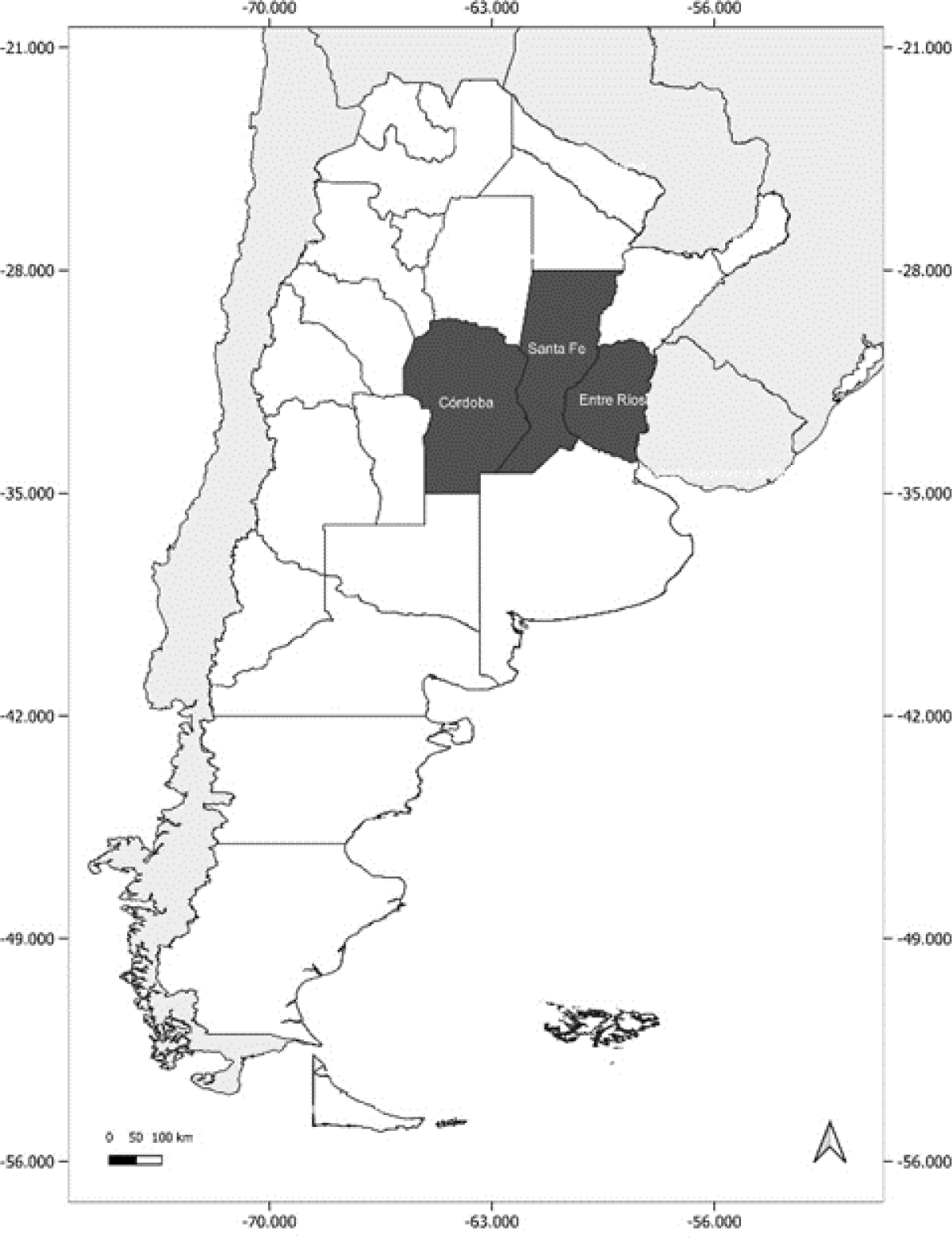 Geographic location of the Central Region, Argentina.
View Figure 1
Geographic location of the Central Region, Argentina.
View Figure 1
At the provincial level, populations estimated from projections made by the National Institute of Statistics and Censuses (INDEC) were used. At the department level, there were no official estimates by sex and five-year age groups, so interpolation formulas were applied to calculate the intercensal population. To that end, the AGEINT spreadsheet of the Population Analysis System Software was used. The populations on which the census interpolation formulas were applied were taken from the National Population Censuses of 1991, 2001 and 2010.
Mortality rates were calculated through the indirect method, calculating standardized mortality ratios (SMR), understood as the ratio between the number of observed deaths and the number of expected deaths. The expected frequencies were obtained using a marginal Poisson model, which allowed controlling the age structure in the different departments, without having to resort to external population [19]. When applied to rare diseases and small areas, SMR can be interpreted as the maximum likelihood estimation of relative risk (RR) under a Poisson model [20].
To identify spatial clusters between CR departments and establish their statistical significance, the non-localized Kulldorff test was used [21,22]. For each cluster, an RR was calculated, which was the ratio between the estimated risk within the cluster and the estimated risk outside it [23]. Clusters obtained from the circular scan analysis were classified as high risk (RR > 1) and low risk (RR < 1). SaTScan program (version 10.1.2) was used.
Two environmental variables were worked with: As levels in drinking water and Ag-Chem exposure. To operationalize the first one, the percentage of exposed population (PEP) to high levels of As in drinking water was considered. This indicator was obtained from provincial studies published in this region, which were representative of the general population, which allowed defining the percentage of the population exposed to high levels of arsenic in drinking water, according to WHO standards (> 10 μg/L) [15].
Ag-Chem exposure was estimated from the "planted hectares per inhabitant" indicator (Ha/inhabitant).
The total planted hectares of the five main crops (soybeans, corn, sunflowers, sorghum and wheat, which make up 95% of the sowing) were considered. Data were obtained from the Directorate of Agricultural Estimates of the Ministry of Agriculture, Livestock and Fisheries of Argentina [24]. The annual values were disaggregated into two twenty-year periods, 1980-1999 and 2000-2019. For each period and department, the Ha/inhabitant indicator was calculated from the ratio between the total planted areas and the total departmental population.
Both variables were calculated for the departments that made up the high- and low-risk clusters obtained from the circular scan method.
At the department cluster level, the correlation between CA cancer mortality and environmental factors was based on a non-parametric Wilcoxon-Mann-Whitney test = 0.05). For statistical tests, [25], by contrasting bilateral and unilateral hypotheses (language R (version 4.4.0) was used, within the RStudio interface (version 2024.4.0).
Given the retrospective nature of the study, the use of pooled and anonymized data, there were no ethical considerations.
Out of a total of 2415 deaths of subjects under 20 years of age registered by neoplasms in the CR during the years 2000 and 2019, 56.7% were male and the remaining 43.3% were female. Of this total number, 25.4% were subjects between 0 and 4 years old, 20.6% between 5 and 9 years old, 23.4% between 10 and 14 years old and the remaining 30.6% were subjects between 15 and 19 years old.
In the CR as a whole, no risk of dying from cancer was observed, the observed frequencies were statistically equal to the estimated frequencies (1.00, CI [0.96 - 1.04. Something similar happened in the provinces of Córdoba: 0.93 (CI [0.88 - 1.00]) and Entre Ríos: 1.08 (CI [0.88 - 1.07]); while in Santa Fe, the observed frequencies exceeded the estimated ones by 8% (1.08, CI [1.02 - 1.15]) representing the highest risk of dying from cancer of the three provinces.
As a result of the circular scan analysis, 3 significant spatial clusters were determined, two high RR and one low RR. The low RR cluster (0.57; p < 0.0001) (C1) is located in the northwest of Córdoba and included the departments of: Colón, Cruz del Eje, Ischilín, Punilla, Río Primero, Río Seco, Sobremonte, Totoral and Tulumba. One of the high RR clusters corresponds to the Capital department of the province (RR = 1.35; p < 0.0001) (C2) and the other is located in the southern area of Santa Fe and in the southwest of Entre Ríos (RR = 1.32; p < 0.0001) (C3). The departments that make up this latter cluster are: Belgrano, Caseros, Constitución, Iriondo, Rosario, San Lorenzo and Victoria (Figure 2).
 Spatial distribution of high (red) and low (blue) RR clusters. Central Region, 2000-2019.
View Figure 2
Spatial distribution of high (red) and low (blue) RR clusters. Central Region, 2000-2019.
View Figure 2
For this analysis, cluster C1 is excluded as it is the capital city of Córdoba province, having urban, socio-economic and demographic characteristics that are totally different from the rest of the clusters.
Table 1 presents the descriptive statistics of the environmental variables selected by low and high RR cluster (C2 and C3). In the case of Ha/inhabitants, it is discriminated by the two periods specified in the description of the region.
Table 1: Environmental characteristics by cluster, Central region, Argentina.View Table 1
Comparing the variations in environmental factors between clusters (Table 2), it was observed that the median number of hectares planted per inhabitant for the period 1980-1999 is higher in the high RR cluster (C3). The same happens when considering the percentage factor of the population exposed to high levels of arsenic. No differences were found between the median values of both clusters for the factor hectares planted per inhabitant for the period 2000-2019.
Table 2: Comparison of environmental characteristics between clusters, Central region, Argentina.View Table 2
An ecological study of child-adolescent cancer mortality in the population of the three provinces that make up the central region of Argentina was conducted to examine its relationship with environmental factors. Two spatial clusters were identified, one with high mortality risk and one with low mortality risk from this pathology for the period 2000-2019.
The analysis shows a significant relationship between one of the high risks and one of the low risk clusters for CA cancer mortality and the two environmental factors studied: hectares planted per inhabitant and population exposed to high levels of arsenic in drinking water.
Regarding the first, Ha/inhabitant, two twenty-year periods were studied. The 1980/1999 period showed significant relationships with high and low risk clusters, with the former showing the highest figures for planted areas; however, no statistically significant differences were recorded in the 2000/2019 period. The first period is characterized by the use of organophosphate agrochemicals; in the second, glyphosate and its adjuvants predominated.
That these timeless relationships between possible exposure periods and mortality from CA cancers are present (since the significant relationships appear in a period prior to that of mortality) raises questions about the origin of these diseases that led to mortality after a latency period. There are two possible routes of paternal-filial transmission of phosphates: genotoxicity and breast milk. The first, expressed in different mutagenic alterations transmitted [26] and the second, demonstrated by the presence of these chemical compounds at the analytical level in samples of exposed populations [27]. Several specific tumors, with a high mortality potential, have been related to prenatal exposures to phosphates: central nervous system [28] and hematological [29], both having a significant participation in the totality of these pathologies.
The fact that there is no relationship between this mortality and current exposures to Ag-Chem, characterized by glyphosate and its adjuvants, allows us to speculate that mortality and exposure have no influence on CA cancer; however, analyses with a low number of cases have found a significant association with leukemia [30]. The lack of agreement with the current agricultural scenarios suggests that these diseases are not related to the contemporary exposure of children. Nevertheless, exposure cannot be ruled out since genetic damage has been shown in child populations in the CR of Argentina [31]. On the other hand, previous studies carried out in the same region found similar timeless associations in relation to cancer mortality in the general population [16].
With regard to population exposure to high levels of arsenic, the findings presented here are a contribution to the scarce information available [5-8]. The RR of cancer mortality in the child-adolescent population was related to a greater or lesser percentage of the population exposed to high levels of arsenic in drinking water.
Ecological studies are exploratory population analyses that, even when they cannot indicate causality, are useful to determine correlations between different variables and the population’s health problems. This leads to new hypotheses to be explored. Undoubtedly, this analysis should be confirmed through field studies conducted in the corresponding departments under assessment and identifying the incidence of similar pathologies. Air quality assessments, broadly related to these pathologies [32,33], would be a significant complement to confirm these hypotheses.
Beyond the limitations mentioned in the previous paragraph, the work this study contributes to the research of CA cancer mortality in Argentina because the previous studies in the country on childhood cancer mortality [34,35] did not include adolescents age groups. Finally, the two environmental variables studied here allow us hypothesize on possible -positive, negative or neutral- synergism between themselves in relation to this type of pathology [36,37].
All authors declare no conflicts of interest.
All authors contributed to hypothesis generation, design, analysis of results, and writing of the paper.
Universidad Nacional de Rosario.